

- Aggregators like Auto Trader, Carwow and Leasing.com are changing automotive search.
- Easy search and comparison are becoming the most important factors of automotive discovery.
- Aggregators set the standard for high-quality UX to reduce friction and remove complexity from the discovery process.
- Strong organic positioning, brand differentiation and fast adaptation are crucial for leasing broker visibility.
The way people discover leasing brands has changed.
For a growing number of UK consumers, the first interaction in the leasing journey is no longer with a broker, lender, or OEM, it’s with an aggregator.
Platforms like Auto Trader, Motorway, Carwow and Leasing.com are increasingly shaping how automotive discovery works. They sit at the top of the search journey, influence comparison behaviour, and set expectations around pricing transparency, filtering, speed, and reassurance.
This shift has important consequences for leasing brokers.
The competitive benchmark is no longer just another leasing website offering similar deals; it’s the experience consumers have already had elsewhere in the automotive market.
As search journeys become more fragmented, aggregators are becoming the default discovery layer for automotive demand. Leasing brands that fail to adapt to that reality will struggle to maintain visibility, conversion efficiency, and long-term brand relevance.
Discovery Has Shifted Away From Individual Brands
The UK automotive journey is now heavily shaped by search and comparison behaviour.
Overall, automotive-related search activity is up 11% year on year in the UK, while the average brand now competes with seven others within the same search journey.
At the same time, consumers are moving between marketplaces, review sites, leasing aggregators, finance calculators, social platforms, and AI tools before they ever visit a brand directly.
Marketplaces and aggregators are increasingly shaping how people begin their car-buying journey. UX, filters, reviews, and search tools are now setting expectations for how easy automotive research should feel.
This matters commercially because the aggregator often becomes the first trusted brand in the process.
This changes the role of leasing broker websites.. It’s no longer the starting point for discovery. In many cases, it’s the destination consumers reach after already forming opinions around price, usability, trust, and convenience elsewhere.
Leasing.com Is Benefiting From This Structural Shift
The strongest example inside leasing is Leasing.com.
The platform has seen significant growth in organic visibility as more consumers begin their leasing research through comparison-led search behaviour rather than direct broker searches.
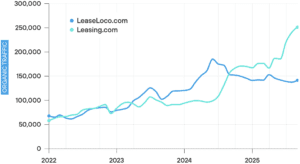
This mirrors wider automotive behaviour. Aggregators and marketplaces are consistently outperforming many traditional automotive retailers in organic visibility growth.
Consumers increasingly prefer environments where they can:
- Compare deals quickly
- Filter by budget and vehicle type
- Understand monthly costs immediately
- Reduce perceived risk through reviews and reassurance
- Avoid friction during early-stage research
Leasing.com aligns closely with those expectations.
The commercial implication is straightforward. Search demand is increasingly flowing towards platforms that simplify decision-making.
This creates pressure on leasing brokers that still rely heavily on outdated landing pages, thin stock feeds, unclear pricing structures, or poor filtering experiences.
The Leasing Journey Now Behaves Like E-commerce
Consumers now approach leasing with e-commerce expectations.
They expect transparent pricing, instant comparison, fast-loading pages, strong mobile UX, and low-friction navigation.
This expectation has been shaped by aggregators across the wider automotive sector, not just leasing.
Consumers are actively looking for clarity, control, and confidence in automotive search journeys.
This behaviour is particularly important in leasing because the category already carries complexity around:
- Mileage limits
- Initial rentals
- Maintenance packages
- Business vs personal agreements
- Salary sacrifice
- EV incentives
- Finance eligibility
Aggregators reduce that complexity through standardisation.
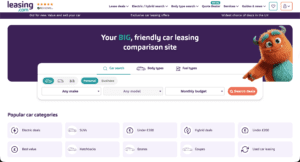
They make comparisons easier. They simplify terminology. They remove friction from early-stage decision-making.
This changes what users expect from every leasing brand they encounter afterwards.
A leasing broker with weak filtering, inconsistent pricing, or unclear deal structures now feels significantly behind market expectations because consumers are benchmarking them against the experience delivered by aggregators.
Search Visibility Is Becoming More Difficult To Defend
This shift also affects how leasing brands compete in organic search.
As aggregators consolidate visibility around high-intent commercial terms, independent brokers face increasing pressure on both rankings and paid acquisition costs.
Visibility is no longer just about technical optimisation or media spend; positioning within a crowded ecosystem has become equally important.
That ecosystem now includes:
- Marketplaces
- Leasing aggregators
- OEM finance pages
- Review publishers
- AI-generated summaries
- Automotive forums
- Video content
- Comparison tools
This has resulted in many brokers competing in search results they no longer control.
In practical terms, this means:
- Generic leasing terms become harder to own
- CPC inflation increases around commercial keywords
- Organic click-through rates become less stable
- More users remain within aggregator ecosystems longer
- Direct brand discovery weakens
This is already visible across wider automotive search behaviour.
Auto Trader continues to dominate organic automotive visibility with an estimated 14.3 million monthly organic visits in September 2025.
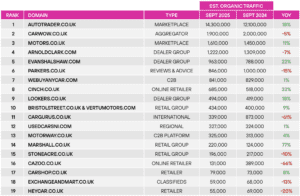
The scale advantage matters because discovery compounds. Platforms that capture early-stage traffic gain stronger behavioural signals, larger content footprints, and more user trust over time.
UX Has Become A Competitive Advantage
For leasing brokers, UX is now directly tied to commercial performance.
Aggregators have effectively reset the minimum acceptable standard for:
- Vehicle filtering
- Deal comparison
- Mobile usability
- Pricing transparency
- Review integration
- Lead handling
- Speed of access to information
This creates a gap between brokers investing in digital experience and brokers relying purely on stock availability or paid media.
Brands winning visibility reduce friction and simplify decisions earlier in the journey.
This has budget implications.
Leasing brands investing heavily into paid acquisition while neglecting site experience will see diminishing efficiency over time because the conversion benchmark is no longer set by direct competitors alone.
Consumers compare every leasing interaction against the easiest digital experience they have already encountered elsewhere in automotive search.
Brand Positioning Matters More Inside Aggregator-Led Markets
As aggregators absorb more top-of-funnel discovery, brand positioning becomes increasingly important lower down the funnel.
Consumers still choose brokers for reasons beyond price alone.
Trust, responsiveness, expertise, delivery expectations, and aftercare all influence conversion decisions.
The challenge is that many leasing brands still look interchangeable.
Where comparison environments dominate discovery, brands need clearer positioning to avoid becoming commoditised.
This means leasing brokers need stronger differentiation around:
- EV expertise
- Salary sacrifice knowledge
- Business leasing support
- Delivery speed
- Customer service
- Stock availability
- Flexible finance solutions
- Specialist vehicle categories
Without that clarity, aggregators continue capturing the value while brokers compete primarily on margin.
AI Discovery Will Accelerate The Shift
Large language models are adding another layer to this trend.
Tools like ChatGPT and Google Gemini are increasingly shaping automotive research behaviour before traditional search even begins.
These systems often pull information from:
- Review platforms
- Aggregators
- Forums
- Structured feeds
- High-authority publishers
This reinforces the visibility advantage aggregators already hold.
As AI-driven discovery grows, brands with weak content ecosystems and limited third-party visibility risk becoming less visible during the research phase altogether.
This makes structured content, clear product data, and strong external visibility increasingly important for leasing brokers.
What Leasing Brands Should Do Next
The market is moving towards platform-led discovery.
This doesn’t mean leasing brokers lose relevance. It means the route to visibility has changed.
Leasing brands should focus on five priorities:
Improve UX And Comparison Functionality
Consumers now expect fast filtering, transparent pricing, and low-friction comparison experiences.
Build Stronger Organic Positioning
Generic leasing visibility is becoming harder to own. Brands need deeper topical authority around high-intent themes like EV leasing, salary sacrifice, business leasing, and affordability.
Invest Beyond Bottom-Funnel Paid Search
Relying purely on transactional PPC leaves brokers exposed as aggregators continue strengthening discovery-stage visibility.
Differentiate The Brand Clearly
Brokers need stronger positioning beyond monthly price alone.
Treat Discovery As A Market Structure Problem
This is no longer just an SEO challenge, it’s a structural shift in how automotive demand forms and gets distributed.
The brands that adapt fastest will be the ones that understand how consumers now discover, compare, and validate leasing decisions.
In 2026, the first leasing brand a consumer remembers is often the platform that helped them narrow the shortlist in the first place.
Want the full breakdown of trends?
👇
Talk To Our Experts
Please submit your details and as much information as you can on what you would like to discuss:
required information