

AI Max for Search changes the rules of paid search. It acts as an automated layer built directly onto traditional account structures, moving us away from rigid keyword syntax toward automated intent matching. For years, success relied on meticulously managing keywords, match types, and negative lists, all balanced against responsive search ads and landing page mapping. This linear logic was easy to explain to stakeholders. While AI Max alters the mechanics, it does not replace the need for strategy; it simply removes the historical crutch of manual execution.
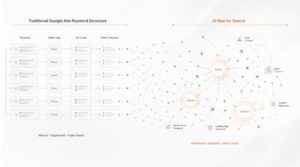
As matching capabilities evolve and ads adapt to user intent, Google directs users to relevant content with speed. Speed alone does not guarantee superior marketing outcomes. The industry conversation must move beyond the simple question of whether to trust the machine. Advertisers should instead evaluate whether they have provided a foundation worth scaling. AI Max cannot rectify a weak market proposition or poor tracking infrastructure. The system scales whatever it receives. If the foundations are robust, the results are powerful; if the inputs are messy, the technology simply amplifies that disorder.
Scaling creativity in this landscape is about constructing a superior commercial system around Search, rather than delegating headline generation to an algorithm. As we move away from purely manual builds, the marketer’s excellence is measured by their ability to brief and guide the system. The role has shifted from operator to strategist, responsible for defining campaign boundaries and identifying where automation requires human intervention. Treating AI Max as a shortcut leads to failure. The platform performs only when supported by quality data and conversion goals that reflect business value. If the destination website is generic, the campaign has little substance to learn from.
True creativity in Search begins long before an ad is served. There must be a seamless connection between intent, messaging, and destination. Effective creative strategies ensure that buyers receive different answers than explorers. While AI Max scales these connections, it requires clear inputs regarding brand values, landing pages, and high-value conversions. Clear direction provides the framework for success. The strongest campaigns often appear deceptive, pairing smart bidding with human-reviewed messaging. Success comes from knowing which controls still matter and avoiding the temptation to over-segment or hand over total control to generic AI. The system needs room to learn under disciplined human supervision.
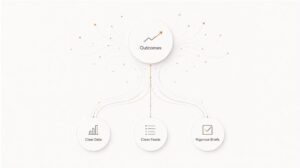
By testing and reviewing lead quality, marketers can judge if AI Max is uncovering genuine demand. The risk is not the AI itself, but the possibility that it makes mediocre marketing appear productive by increasing volume while eroding quality. To counter this, measure margin and revenue quality to ensure the system attracts the right customers. Establish firm guardrails to prevent tone-of-voice drift or compliance issues. The machine adapts quickly, but it cannot decide what a brand represents. That responsibility remains with the marketer. The advantage now lies in the quality of the brief and the rigour of the review process.
AI Max forces an honest conversation about the purpose of paid search. For too long, creativity was reduced to the repetitive exercise of writing headlines and chasing ad strength metrics, an approach that is now obsolete. Today, the creative advantage is found in infrastructure: the clarity of the offer and the discipline of the system. Before activating automation, ensure that conversion goals truly guide the machine, landing pages build authentic trust, and guardrails filter irrelevant traffic. AI Max scales your output but demands more judgment. The winners will not be those generating the most assets, but those building the strongest systems. Strategy is no longer optional. It is the only thing that prevents a weak plan from being exposed by the very technology intended to enhance it.