

Tesla dominates, but challengers are closing in.
Looking at UK search behaviour gives a useful view of which EV brands actually have consumer attention right now, not just which ones are selling cars. It shows who people are curious about, who they’re actively comparing, and who they already trust.
This isn’t a sales leaderboard. It’s a snapshot of mindshare. And it tells a slightly different story.
Tesla: Still the Benchmark for EV Visibility
Tesla remains the reference point for electric cars in the UK, both in sales and in search.
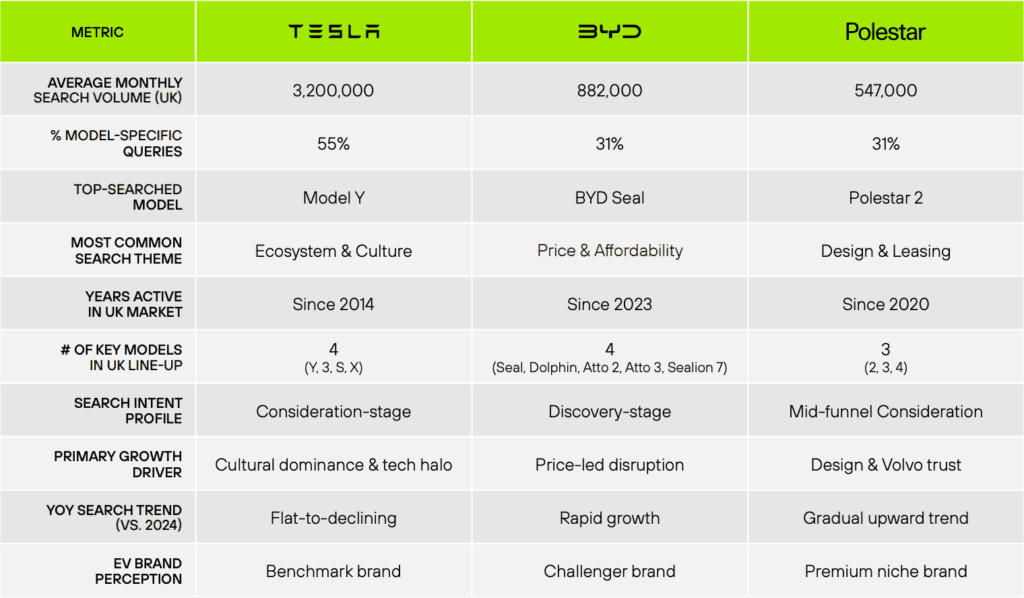
Across all keywords containing “Tesla”, the brand attracts over 3.2 million searches per month. That covers everything from models and finance to charging, batteries and software.
What really stands out is how specific that demand is.
More than half of Tesla searches are model-led, mainly focused on the Model 3 and Model Y. That’s a sign of maturity. People aren’t just learning about Tesla, they’re actively weighing it up.
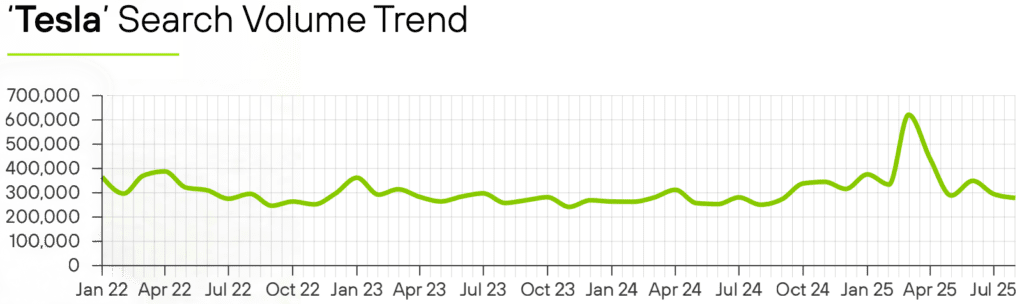
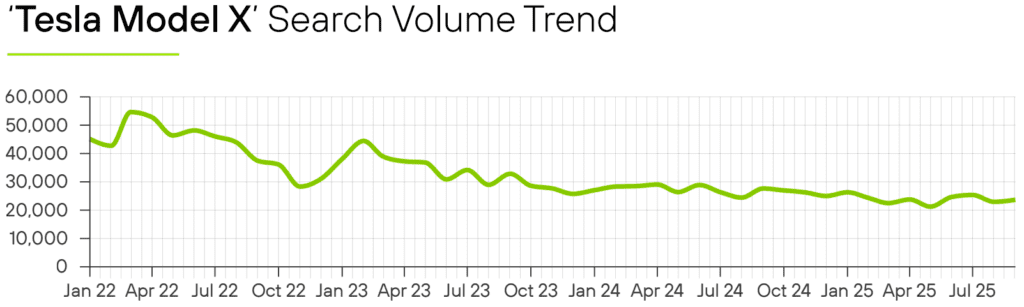
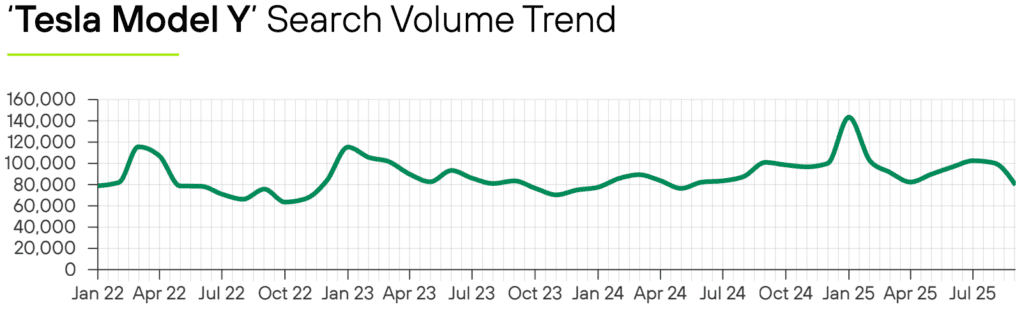
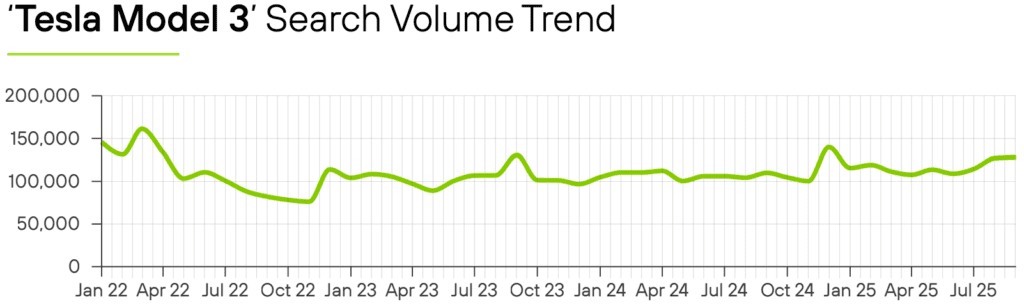
Tesla’s advantage isn’t just being first. It’s clarity. A simple model line up, visible infrastructure and years of cultural exposure mean people know exactly what to search for, and why.
BYD: Attention Is Rising Faster Than Sales
BYD is the fastest growing EV brand in UK search.
From almost no visibility a few years ago, BYD now attracts around 880,000 searches per month across all keywords containing the brand name. That puts it into the same digital conversation as long established manufacturers, despite only launching in the UK in 2023.
But the shape of that demand matters.
Only around 31 percent of BYD searches are model specific. Most searches still sit higher up the funnel, focused on brand discovery, price and comparisons.
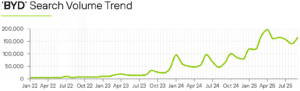
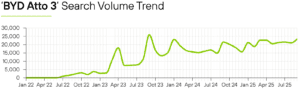
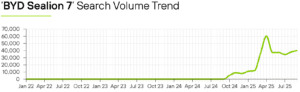
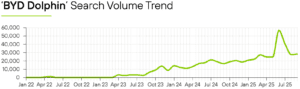
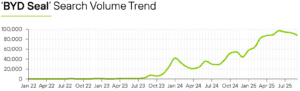
People are clearly interested. They’re just still making up their minds. Search behaviour shows curiosity first, commitment later.
Polestar: Smaller Volume, Sharper Intent
Polestar sits somewhere between Tesla and BYD.
Total UK search volume for keywords containing “Polestar” is around 547,000 per month. That’s lower than Tesla and BYD, but the intent is tighter.
Roughly 31 percent of Polestar searches are model led, with most of that demand focused on the Polestar 2 and growing interest in the Polestar 3 and 4.
What’s different is the type of questions being asked.
Polestar searches lean heavily into reviews, design and comparisons. Less “what is this brand?” and more “is this the right one for me?”
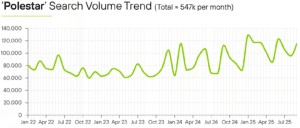
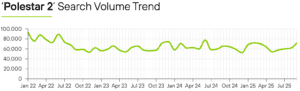
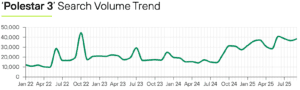
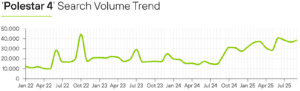
That suggests a more considered audience. Fewer people overall, but a higher proportion already weighing Polestar against established premium alternatives.
What Search Data Reveals That Sales Charts Don’t
Looking across all three brands, a clear pattern emerges:
-
Tesla owns certainty. Consumers know the models, the ecosystem and the trade-offs.
-
BYD owns curiosity. Attention is huge, but trust is still forming.
-
Polestar owns consideration. Smaller volumes, but more deliberate evaluation.
Search shows where brands sit in people’s heads long before a dealership visit or configurator click.
Why This Matters for EV Brands
Search is where perception forms.
If a brand dominates sales but fades from early stage search, momentum slows.
If attention spikes but intent doesn’t follow, conversion struggles.
The brands winning right now aren’t just launching good cars. They’re showing up in the moments when people are deciding what to trust, compare and shortlist.
Search is a Mirror and a Forecast
Search doesn’t just reflect what consumers already know. It shows what they’re curious about next. That makes it a leading indicator, and a competitive advantage for brands that treat it seriously.
Want to see where your brand sits in the EV conversation? We can help.
enquiries@upshift.co.uk
Talk To Our Experts
Please submit your details and as much information as you can on what you would like to discuss:
required information